For a communication specialist, an event like the Academy Awards is more than just a gala, it is also a massive dataset revealing how public attention shifts.
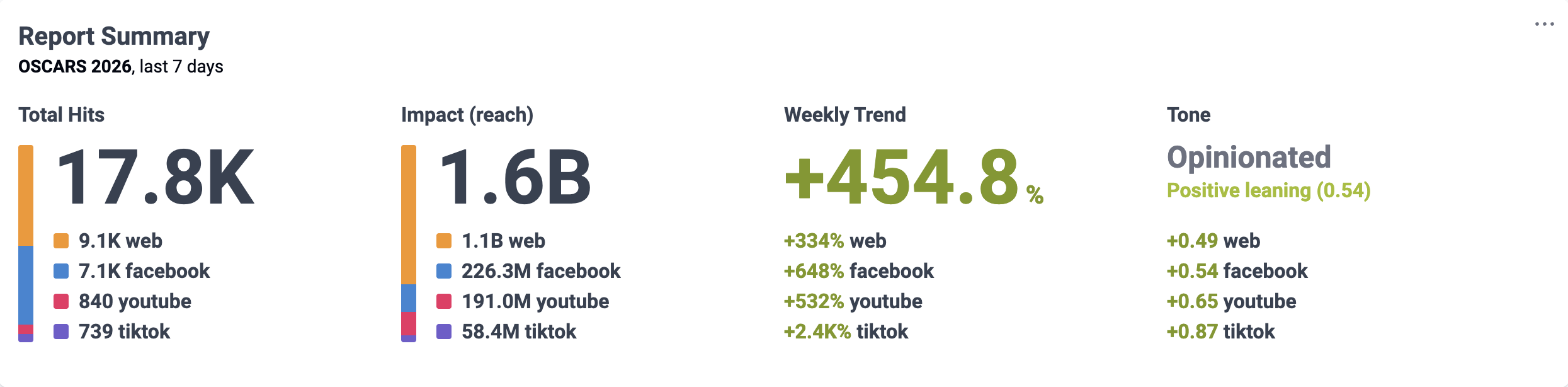
Using our NewsVibe media intelligence platform, we analyzed almost 20 thousand mentions related to the event from 35 countries, from Brazil to Azerbaijan and from Romania to the US. We extracted and cross-referenced network, sentiment, geographical and source data to decode the true global conversation. The result shows a highly fragmented public interest, where cinematic quality competes directly with geopolitical tensions and regional pride.
Here are the 5 main strategic insights extracted from the event’s digital ecosystem:
1. Geopolitical tensions rival entertainment
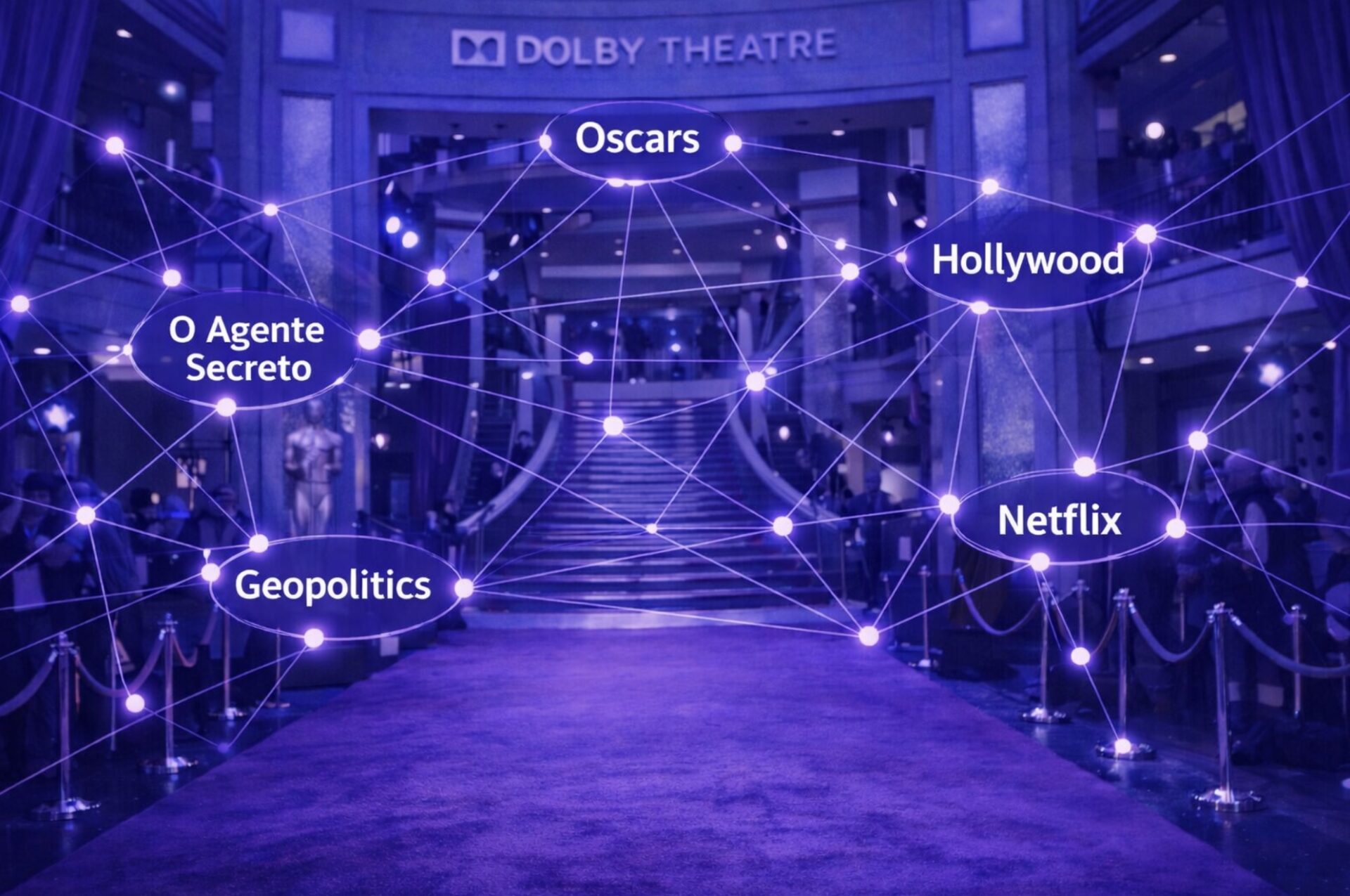
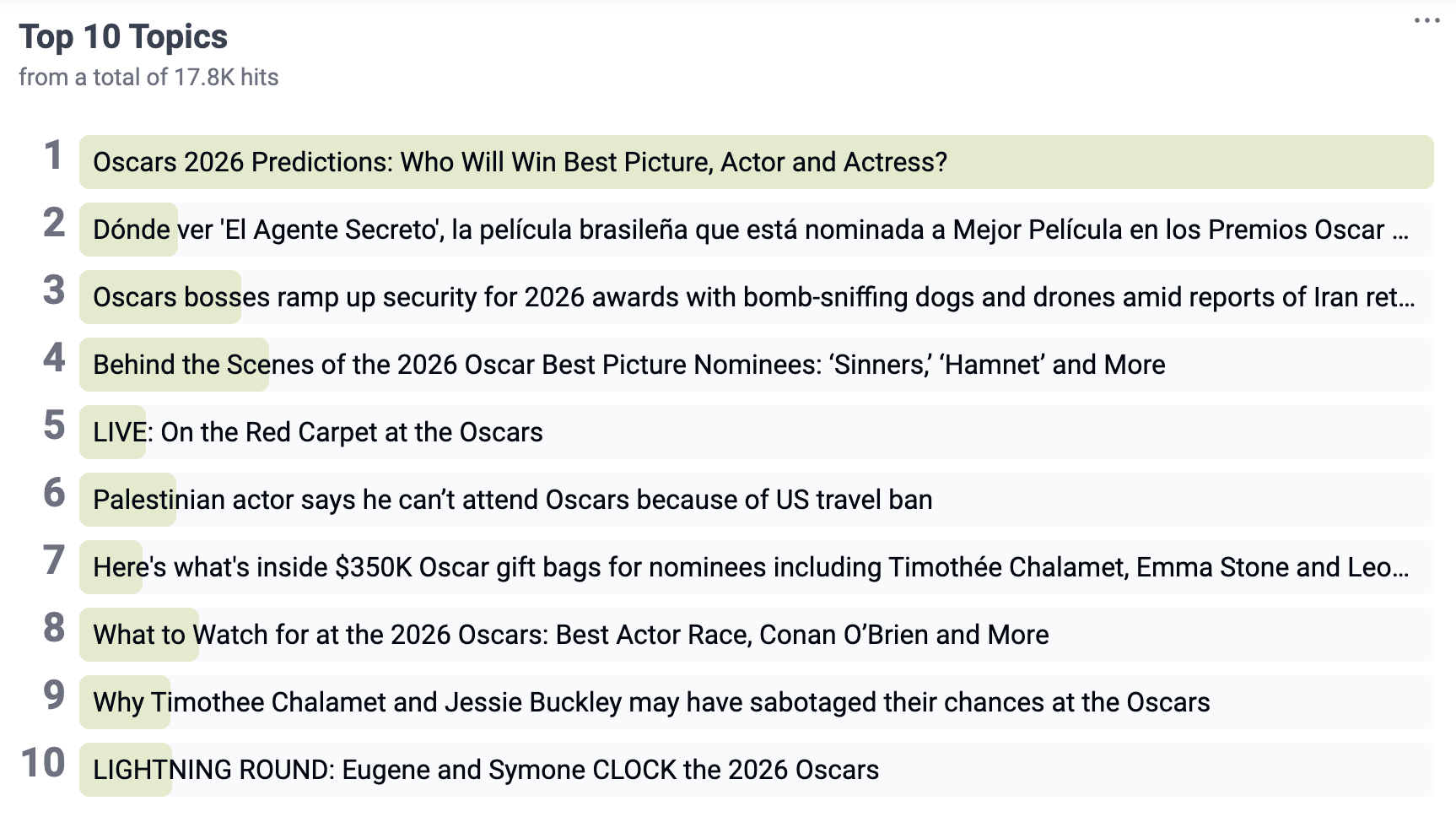
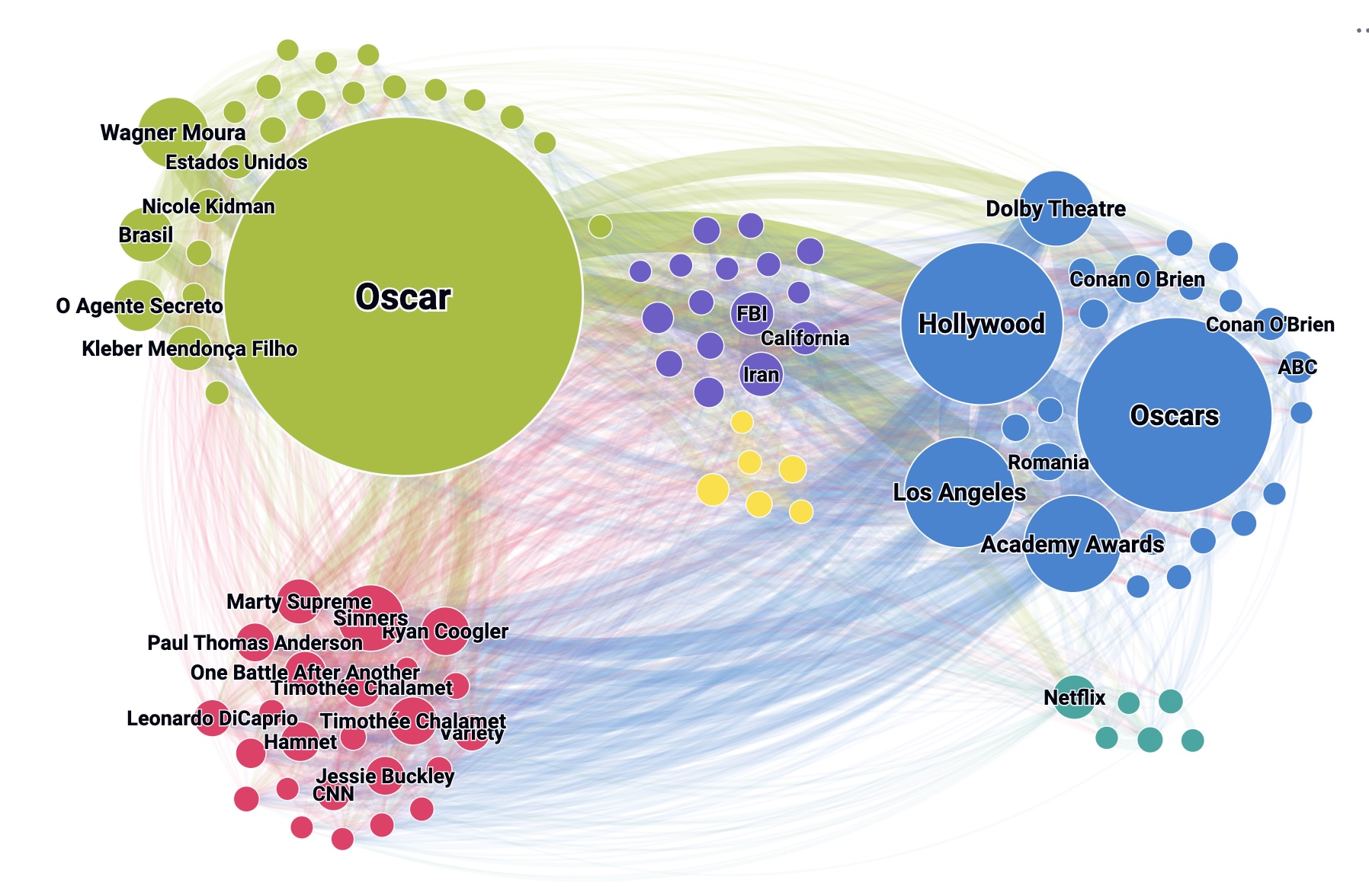
While the main conversation remained anchored in expected institutional entities (Oscars, Hollywood, Dolby Theatre), the platform captured a major deviation of media attention toward global security. The Top 10 Topics chart perfectly explains this anomaly: the third most viral topic of the gala was a security alert involving bomb-sniffing dogs and drones, triggered by reports of potential retaliatory strikes by Iran. Additionally, Topic #6 highlighted a Palestinian actor unable to attend due to a US travel ban. These narratives pushed entities like Iran, Gaza and Putin directly into the negative sentiment zone (red) of the conversational map, hijacking the event’s agenda (see also conclusion 3 for reference).
2. Audience fragmentation – the rise of parallel regional echo chambers
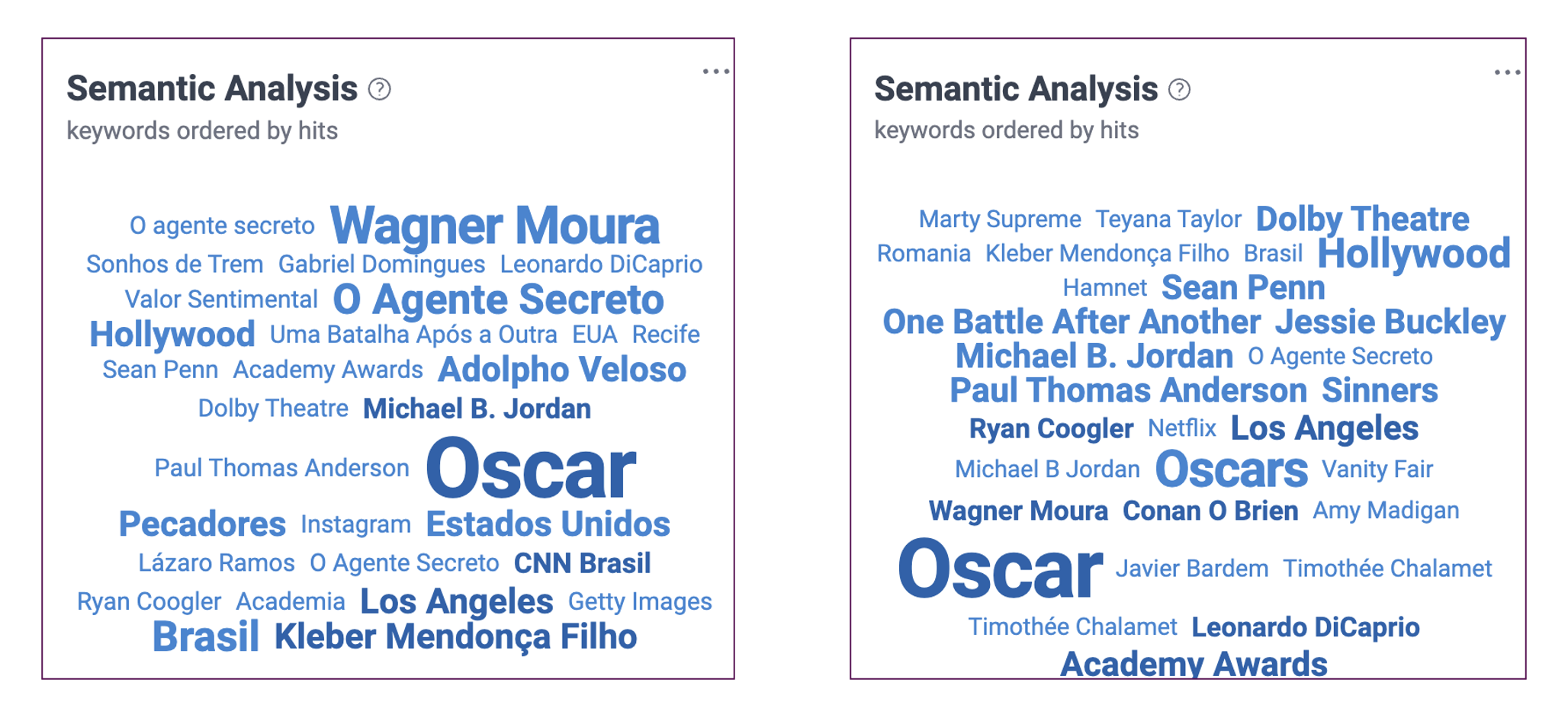
A critical lesson for global communicators is how a well-mobilized regional audience can rival US media hegemony. In the geographical distribution of mentions, although the US comfortably leads, Brazil generated a massive volume, taking the #2 spot globally in our dataset, followed by Spain at #3. This Lusophone wave was propelled by the film O Agente Secreto (Topic #2 globally: “Dónde ver ‘El Agente Secreto’” – see above).
The impact was so strong that publications like CNN Brasil, oglobo and Revista Quem outranked numerous American platforms in the top relevant content sources worldwide.
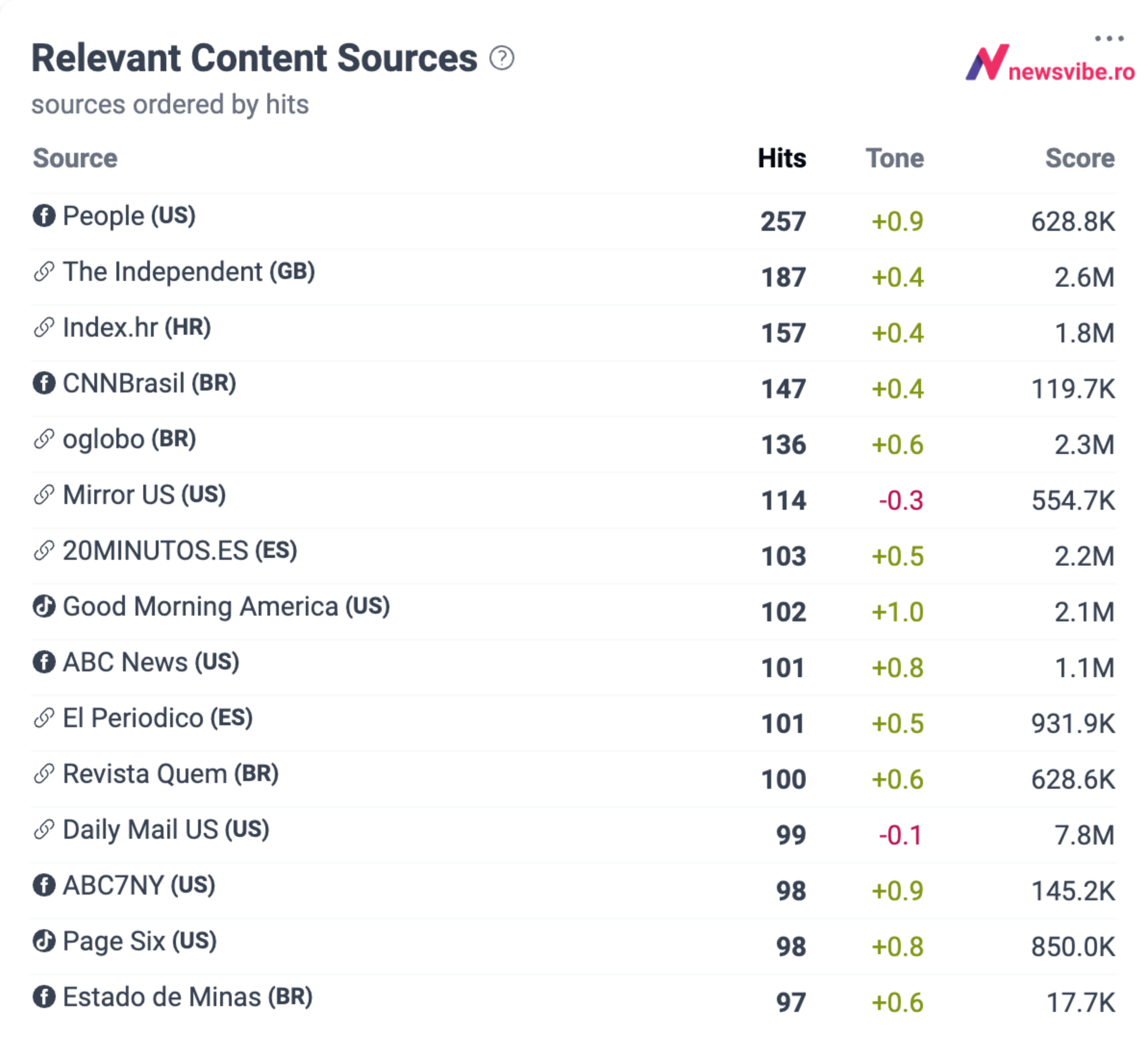
Contrasting global data with Brazilian analytics underscores the massive, isolated footprint of O Agente Secreto, including star Wagner Moura and director Kleber Mendonça, within the local echo chamber.
3. Toxic visibility vs. validated success, or the social media polarization trap
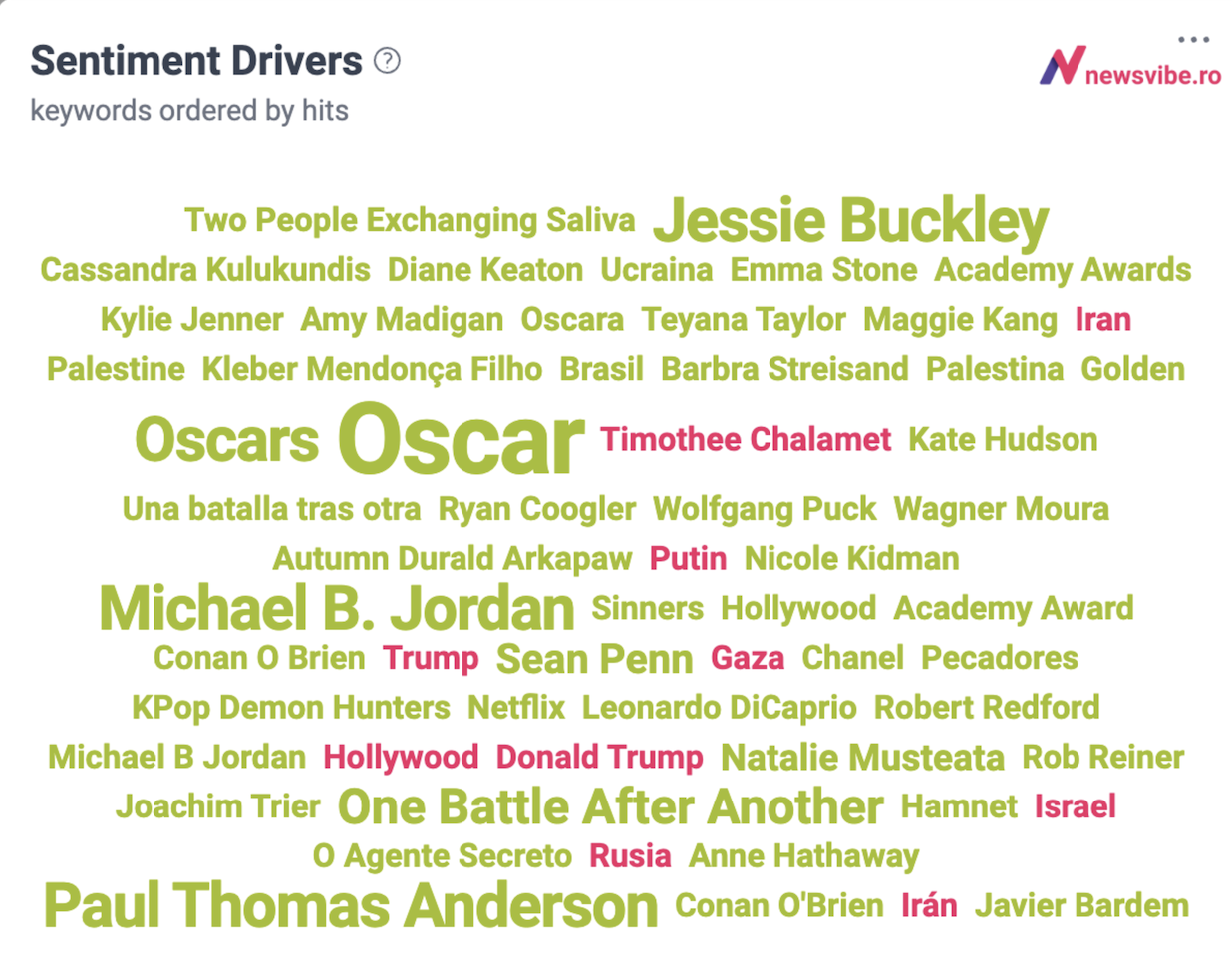
At a macro level, the event was protected by a balanced tone: 60% of mentions were neutral/factual and 35% leaned positive. Major winners dominated this sentiment: Paul Thomas Anderson (winning Best Picture and Best Director for One Battle After Another) and Jessie Buckley (making history with her Best Actress win for Hamnet) acted as strong vectors of positive sentiment.
Conversely, high visibility does not automatically equal good reputation. The entity Timothée Chalamet appears heavily colored in red in the sentiment visualization (indicating negative sentiment). His film, Marty Supreme, lost all 9 of its nominations, and his massive volume of mentions was artificially sustained by his highly criticized comments regarding opera and ballet (a topic even mocked by the gala’s host). This digital controversy is confirmed by its presence at #9 in Top Topics: debates about how his own statements sabotaged his Oscar chances. This is a textbook demonstration of inflated volume through negative perception.
4. Product performance as an independent ecosystem generator
Network analysis isolates “Netflix” as the only streaming platform capable of generating a distinct conversational ecosystem, completely separated from the background noise (and controversies) of Hollywood. This visual autonomy does not stem from a speculative PR strategy, but from direct content performance: winning multiple trophies with titles like KPop Demon Hunters and Frankenstein. While traditional studios cannibalized each other in a central cluster marked by controversies, this undeniable performance allowed Netflix to decouple and monopolize its own conversational niche with an impeccable reputation (green on the sentiment map).
5. Platform dynamics: reaction speed shifts to short-video networks
To understand where these narratives amplify, NewsVibe tools measured acceleration across channels. Although Web and Facebook maintain dominant absolute volumes, we recorded an explosion of acceleration on TikTok which indicates a clear shift in consumption: immediate reactions, memes and controversies from live-broadcast events are now digested and viralized on short-video platforms.
The general tone was also noticeably more positive on TikTok compared to web, Facebook or YouTube.